
ANSWER: The contraindications for sclerotherapy may include: pregnancy, inability to walk, allergy to the sclerosing agent and the inability or unwillingness to follow instructions. See more FAQ's
At Vein Doctors Group, we can help you make the best choice for the treatment of your leg veins beginning with a comprehensive consultation, ultrasound and general discussion of your recommended treatment. To make an appointment or to find out more about the vein treatment procedures performed at Vein Doctors Group, please contact us on 1800 483 467 weekdays between 8:30am - 4.00pm.
You will be able to learn a lot about vein disease and your treatment choices for varicose veins or spider veins from our website, however, there are other more general sites that you may also find helpful. These are The Australasian College of Phlebology web site and the American Vein and Lymphatic Society web site.
Dr Rhys Bennett
BMed, MD (Qld), FRACGP, GradDip MedUltrasound (Qld), BMRS (MI)

Dr. Rhys Bennett is a dedicated physician with a strong background in sonography and over a decade of experience as a Senior Radiographer/Sonographer at Gold Coast University Hospital and Robina Hospital. His early career in sonography provided a foundation that led him to a deep interest in venous health and phlebology. While advancing his skills in general practice, Dr. Bennett witnessed the devastating effects of long-term pain and chronic conditions on patients.
Dr. Bennett graduated with the Dean’s Academic Excellence Award from Bond University Medical School on the Gold Coast. His time as a radiology resident, gaining experience from the interventional radiology team at GCUH, sparked his interest in endovascular management and techniques. He completed his fellowship with RACGP, recognizing the importance of venous health and the specialised treatment required for conditions such as lipoedema and swollen legs.
Focusing on both conservative management and surgical intervention to help patients manage conditions like lipoedema and lymphoedema, Dr Bennett aims to alleviate their pain and improve their quality of life. His dedication to venous health exemplifies his holistic approach to patient care.
Outside of his professional life, Dr. Bennett enjoys surfing, wakeboarding, foiling, and playing basketball. He is also a proud father of two beautiful girls who keep him busy.
Dr Jane Cross is a vascular, endovascular and general surgeon working in North Sydney.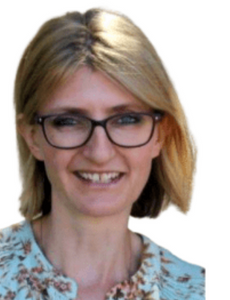
Dr Cross was awarded a Master’s degree from Cambridge University, UK. She then completed her medical education in London where she graduated with a distinction in her MBBS (University of London). She undertook an internship in London and residency in Bristol before being accepted onto the Oxford Basic Surgical Training Programme. Having gained membership of the Royal College of Surgeons of England (MRCS), she was then accepted onto the Oxford Higher Surgical Training Programme where she underwent specialist training in both General and Vascular Surgery. During her training she completed a Medical Doctorate degree at University College London (UCL). She was awarded her Fellowship of the Royal College of Surgeons of England (FRCS) before competing clinical fellowships in Paris and Sydney. She gained Fellowship of the Royal Australasian College of Surgeons (FRACS) and has worked at consultant level in Lismore, northern NSW, for the past seven years. She has recently made the move to Sydney and has happily worked at our North Sydney clinic ever since.
Her specialist areas include arterial, venous, aneurysmal, fistula, carotid, hernia, cholecystectomy, laparoscopic, skin and breast surgery.
Phlebologist, FACP, MBCHB, FRACGP, GCHS USyd, IDD UGraz (with distinction)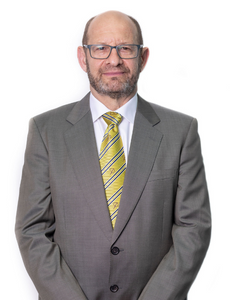
Dr Stuart McMaster joined the Vein Doctors Group in 2019, having previously worked with Dr Lekich in providing an outreach vein clinic in Mackay in the early 2010s, and provided vein treatment services to patients on Brisbane’s North Side since the mid 2000s.
Dr McMaster graduated from the University of Otago Medical School in 1987, working initially as a general practitioner and rural hospital clinician and obtaining general practice fellowship (FRNZGP) in 1991. Emigrating to Brisbane in 2003, he then pursued special interests of Skin Cancer medicine and Phlebology to add to his general practice skills. As one of the first cohort of doctors to graduate with the Australasian College of Phlebology, Dr McMaster gained his experience particularly under the mentorship of Dr David Jenkins in Sydney, as well as Dr Kurosh Parsi, Dr Paul Thibault and Professor Lourens Bester.
Dr McMaster continues to practice and has substantial clinical experience in the use of all of the modern non-surgical means to treat both varicose and surface veins. He also manages other venous problems of the lower limbs such as venous malformations, superficial phlebitis and deep vein thrombosis. As well as this he maintains a broad interest in General Practice, emergency medicine, rural and remote medicine, and skin cancer medicine.
Dr McMaster has held positions as an Examiner with the Royal Australian College of General Practitioners, and the Chief Censor with the Australasian College of Phlebology.
Dr McMaster’s philosophy is to treat venous diseases in the most efficient and effective manner possible, while avoiding unnecessary and potentially harmful interventions. He aims to give every person who attends an improvement in their knowledge of venous disease, an improvement in their symptoms and appearance of their veins, and a better quality of life.
BSc, MBBS (Qld), FRACGP, DAME, Certified Sclerotherapist (ACP)
After graduating from the University of Queensland with a Bachelor of Medicine and Surgery, Dr Jackman travelled all across Australia, gathering experience in Cairns, Darwin, and Broome.

Dr Jackman spent several years with the Royal Flying Doctors, helping people in far off communities, and has been a GP for over 15 years. Through her GP experience, she gained a high valuation for how movement and mobility affects many aspects of a person’s wellbeing, and led her to gaining irreplaceable knowledge from the Australasian College of Phlebology and becoming a sclerotherapy gold medal recipient from the college.
We are delighted that Dr Jackman has found a home as part of the Vein Doctors Group family.
Outside of the medical world, Dr Jackman continues to push herself physically and mentally. She refined her sense of aesthetics and appreciation of beauty through studying Fashion and Textile Design in Perth, and also enjoys a passion in kitesurfing. The latter of which led her competing in the Women’s Open Ocean Kite Foiling race in Mauritius against an elite field of international competitors.
Dr Jackman’s personal attentiveness toward physical and mental health has motivated her to practice the same philosophy toward her patients. In particular, she respects the importance movement and mobility has on every aspect on one’s wellbeing, and how an effective treatment of vein issues can significantly enhance her efforts in those pursuits.
BSc, MBBS (UQ), FRACGP, Certified Sclerotherapist (ACP)
Born in Singapore, Dr Nicholas Teo moved to Queensland to study medicine at the University of Queensland and fell in love with sunny Queensland where he has lived, trained and worked for the past 10 years. Dr Teo graduated with a Bachelor of Medicine and a Bachelor of Surgery from the University of Queensland in 2015.
Dr. Teo has worked at the Gold Coast University Hospital, the Toowoomba Base Hospital and at the St Andrews Hospital in Toowoomba. He gained solid experience with acute medicine and cardiac emergency units, aiding the development of the Rapid Access Heart Centre at St. Andrews Hospital. His time treating emergency cardiac issues led to an interest in studying an ultrasound course and becoming a member of the Australasian Society of Ultrasound in Medicine.
Working as a GP for two years, Dr. Teo saw firsthand how severe the impact of having painful, swollen legs could be. He witnessed the transformative potential modern Phlebological treatment could have in combining ultrasound skills with the cutting edge treatment of chronic venous disease and leg ulcers.
Dr. Teo further cemented his qualifications to treat spider veins and varicose veins by becoming a certified sclerotherapist, working towards a Fellowship with the Australasian College of Phlebology. Outside of medicine, Dr Teo has lived and studied in Singapore, in the USA and in Canada. He enjoys swimming, snowboarding, and spending time on the beach with his family.
Phlebologist, FACP, MBBS (Qld), JD Barrister at Law (Qld), MBA, GAICD, Medical Director Vein Doctors Group, CEO Miami Private Hospital
Dr Lekich is the Medical Director of Vein Doctors Group. He changed career paths from pursuing an eye career to the treatment of venous disease following the serious complication of a blood clot his then-wife had with varicose veins during pregnancy. As well as offering a comprehensive modern non-surgical treatment for varicose veins, Dr Lekich established a pregnancy vein service to support women with varicose veins during pregnancy.
Further, he explored the specialised Open Ended Vasectomy to offer this service to the partners of his female patients who have to stop the oral contraceptive pill due to their varicose veins.After completing his medical degree in 1991 from the University of Queensland, Dr Lekich worked at the Royal Brisbane Hospital as a resident for three years. As a senior medical officer, he completed numerous country hospital rotations as a relieving Medical Superintendent. At Royal Brisbane Hospital his focus was on surgical/procedural-based specialisations.
Further, he has a strong background in Emergency Medicine and eyes namely the retina.Dr Lekich’s four (4) year fellowship training with the peak body for non-surgical management of venous disorder in Australia was with the Australasian College of Phlebology. This meant that Dr. Lekich had achieved the highest level of structured advanced training for this modern non-surgical treatment of venous disorders in Australia.
To enable Dr Lekich to deliver the best possible ultrasound assisted treatment of varicose veins, he has undergone formal training by way of Certificate of Ultrasound in Phlebology (C.U.P): Introductory Course and Certificate of Ultrasound in Phlebology (C.U.P): Advanced Course.Dr Lekich’s supervisor during his advanced training was A/Prof Kurosh Parsi who is the Australasian College of Phlebology President, Vice President of the International Union of Phlebology and a PhD Researcher.
Other mentors of note are Australasian College of Phlebology founding members Dr Thibault, the father of Phlebology in Australia (NSW), Dr Loizou (Victoria) and Dr Jenkins (NSW).
Dr Lekich regularly attends conferences and on-going education seminars. He regularly speaks at scientific meetings and conferences and is involved in delivering workshops training doctors. Further Dr. Lekich is a preceptor, mentor and supervisor for phlebology trainees.
Apart from the study of medicine, whilst working full time, Dr Lekich has furthered his university education completing a postgraduate law degree (Juris Doctor) from Bond University in 2004 inspired by the medical indemnity crisis. He then completed the Bar Practice Course at the Queensland University of Technology in 2005 and was admitted as a Barrister in the Supreme Court of Queensland in 2005.
He completed his Masters of Business Administration also at Bond University and has been an Assistant Professor in the Bond University Medical School, Gold Coast Australia.Additional to Dr. Lekich’s venous work, he was trained by the pioneer of the specialised form of vasectomy Dr. Bruce Errey of the 30,041 Open Ended Vasectomy fame. This approach to vasectomy is very specialised and performed by a small percentage of doctors. This form of vasectomy is designed to minimise post vasectomy congestion pain and is more readily reversible should circumstances change.
This Open Ended Vasectomy service complements the care Dr. Lekich provides his female vein patients so that they can stop the oral contraceptive pill.Further Dr Lekich has been trained to perform microsurgery personally at the microscope over three years by the Father of Microsurgery, Professor Earl Owen. Professor Owen performed the world’s first hand and double hands transplant and the collaborator of the first face transplant. This microsurgical training enables Dr Lekich to successfully reverse vasectomies.Dr Lekich is a devoted father of three children and he enjoys influencing them to the best young adults they can be. His other languages include fluent Croatian and Serbian.
The following are Dr Chris Lekich’s professional Society Memberships:
